




You might be thinking that dense canopy, north-facing beds or root competition all mean you cannot have a successful shade garden.
Every Texas yard has one: an area under a tree where nothing seems to want to grow. Most advice treats this spot like a defect — something to fix with more mulch, less water, a different fertilizer. But that bed isn't broken. It just needs to be planted for the existing conditions, not trying to change them.
Dense tree canopy creates a very specific environment: low light and competition for water from established tree roots. Native plants can handle these conditions without skipping a beat. And they feed wildlife — enjoy a space full of birds without ever putting up a single bird feeder.
What This Actually Looks Like in a Bed
None of that has to mean a shade garden is just ground cover. Focus on creating layers, height, adding texture, and pops of color. Here are twenty Texas natives that make that possible.
The Groundcover Layer
- Native Sedges (Carex spp.) — give you the soft, grassy look that makes for a perfect canvas for other plants.
- Heartleaf Skullcap (Scutellaria ovata) — fuzzy, heart-shaped leaves and spikes of lavender-blue blooms in spring; spreads by flashy roots to knit a bed together.
- Golden Groundsel (Packera obovata) — an evergreen perennial that spreads slowly, and has cheerful yellow flowers in early spring.
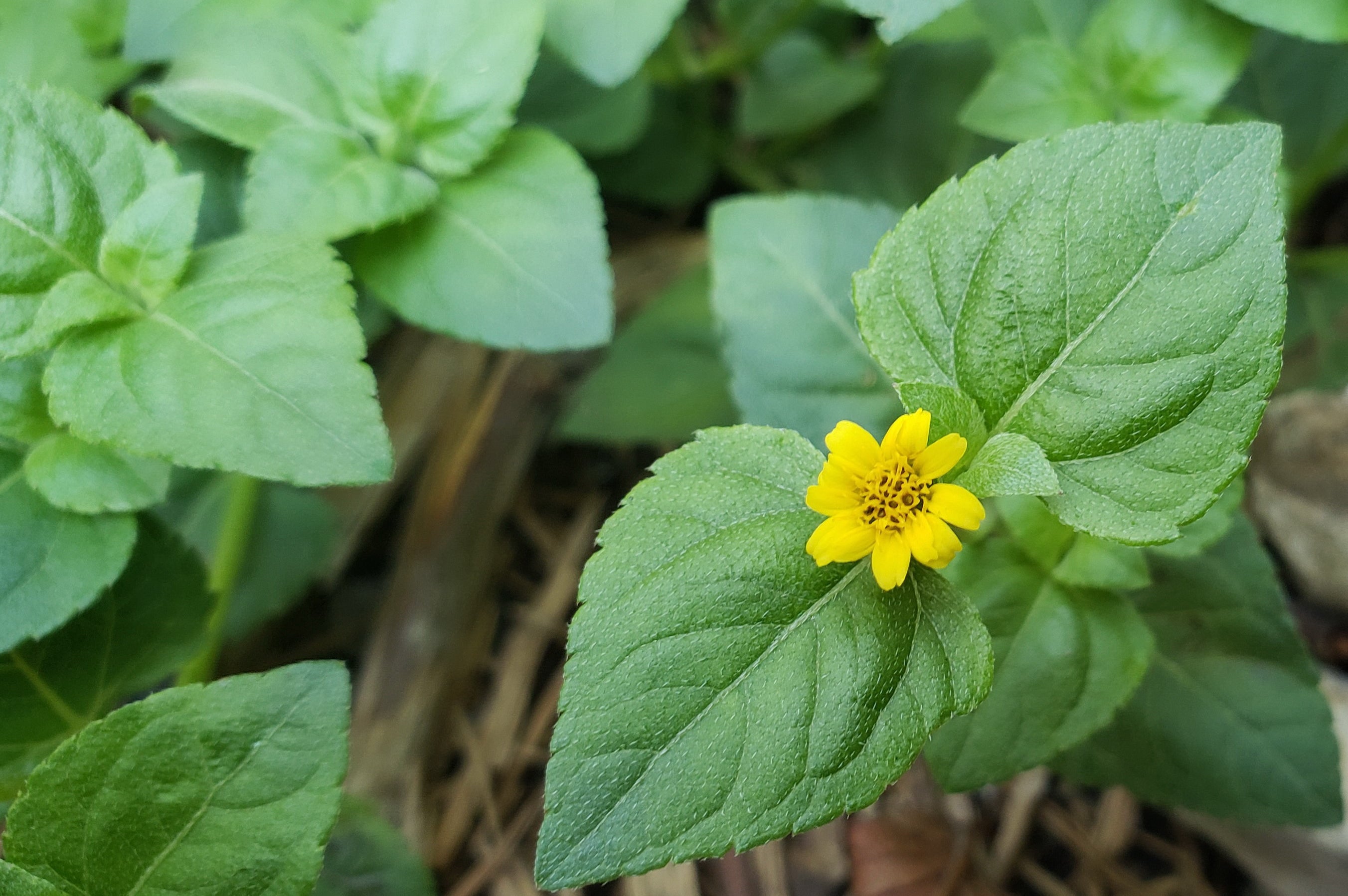
- Horseherb (Calyptocarpus vialis) — a tough, low, walkable groundcover with tiny yellow flowers — one of the few plants that can double as a shade lawn substitute.
- Pigeonberry (Rivina humilis) — small white-to-pink flowers followed by bright red berries; birds treat it like a standing buffet.
- Clover Fern (Marsilea macropoda) — features clover-shaped leaves; it spreads quickly to create dense, low-growing mat.
- Prairie Petunia (Ruellia humilis) — soft lavender, petunia-shaped flowers on a compact plant that fills gaps between taller neighbors. Does best in part sun or part shade - think bright woodland edge.

Texture and Movement
- Wood Fern (Thelypteris kunthii) — graceful fern with arching fronds — instant textural contrast against broadleaf natives.
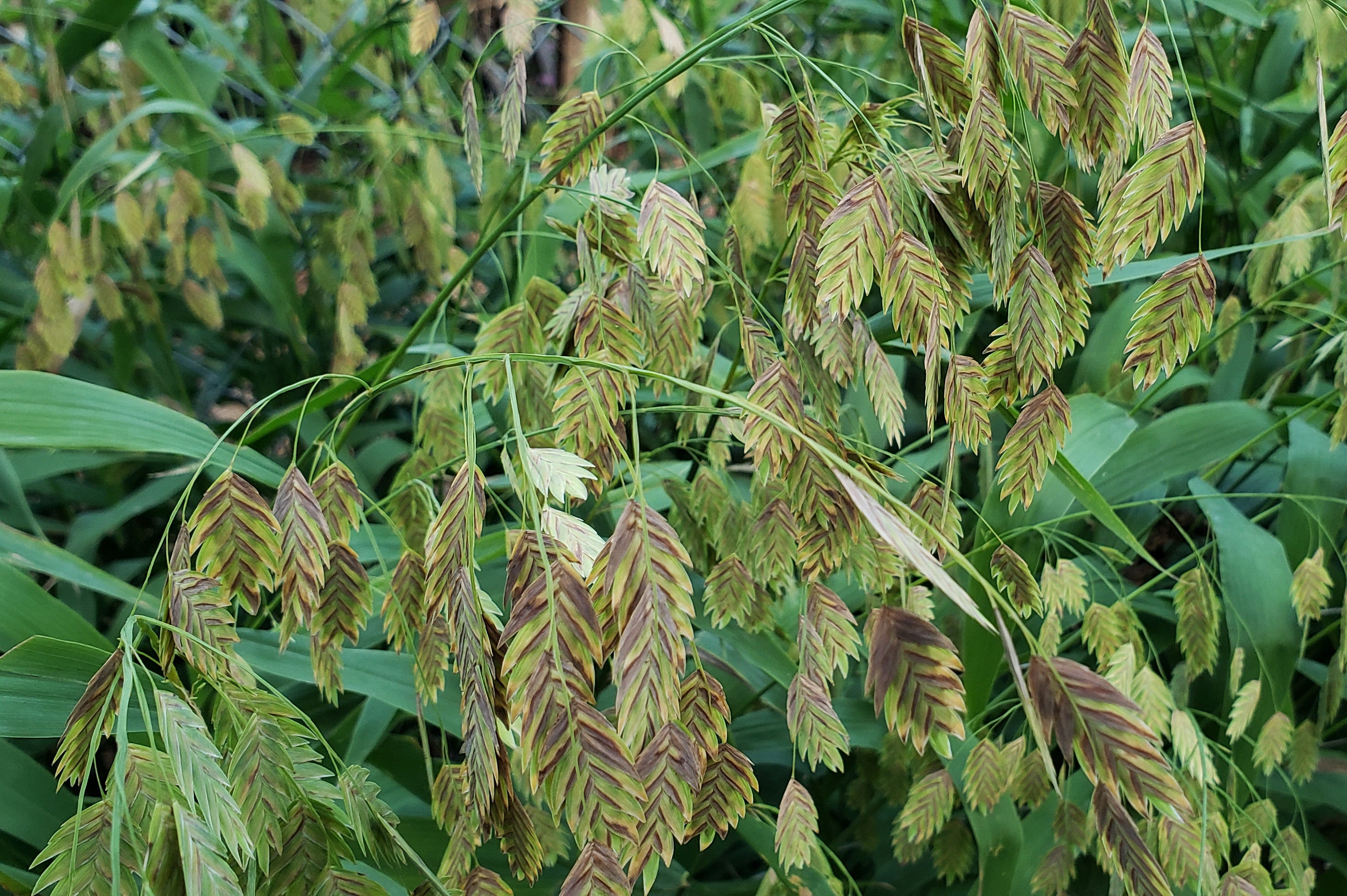
- Inland Sea Oats (Chasmanthium latifolium) — a striking native grass with broad leaf blades and attractive seedheads; looks best in drifts. Adds texture, vertical interest and and element of sound to a garden.

Inland Sea Oats (Chasmanthium latifolium)
Pops of Color
- Cedar Sage (Salvia roemeriana) - scarlet, tubular flowers low to the ground - one of the few true shade-blooming salvias, and a dependable hummingbird draw.
- Lyreleaf Sage (Salvia lyrata) - a low rosette with lavender spring blooms and wine-tinted foliage that colors up further in cooler months.
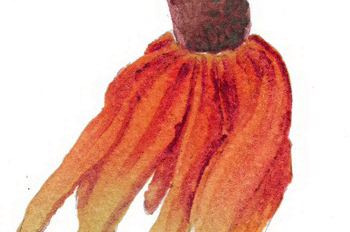
- Columbines (Aquilegia canadensis / A. chrysantha var. hinckleyana) - the red-and-yellow native columbine and its yellow cousin, both blooming in the spring.
- Turk's Cap (Malvaviscus arboreus var. drummondii) - bright red, twisted blooms that keep coming all through summer, even in deep shade. One of hummingbirds' favorite.
- Blue Mistflower (Conoclinium coelestinum) - fuzzy blue-purple blooms from late summer into fall — a magnet for butterflies.

Height and Structure
- Coralberry (Symphoricarpos orbiculatus) - an arching, suckering shrub whose coral-pink to purple fall berries feed birds well into winter, and perfect choice for soil erosion.
- American Beautyberry (Callicarpa americana) - a loose, arching shrub known for clusters of magenta purple berries in fall; makes a great focal point, and is a favorite with birds.
- Shrubby Boneset (Ageratina havanensis) - features fuzzy white blooms in the fall, making it one of the best fall pollinator plants for shade.
- Frostweed (Verbesina virginica) - tall, white-blooming, and a favorite last stop for migrating monarchs — with the bonus of the delicate ice-ribbon "frost flowers" it forms at its base on the season's first hard freeze.
- Late Boneset (Eupatorium serotinum) - flat-topped white blooms in late summer, drawing in a plethora of pollinators.
- Red Buckeye (Aesculus pavia) - a small understory tree or large shrub with exotic-looking tubular red blooms in the spring, built for hummingbirds - one of the first nectar sources they find each year.

Planting in the shade is more forgiving which allows you to plant year-round. Layer native plants to create a woodland garden, and shaded area stops reading as empty ground under a tree. It reads as a habitat, doing exactly what it was built to do.

Red Columbine (Aquilegia canadensis)
